
Industry News

Exploring the Power and Versatility of Embedded PCs in Modern Applications
Innovative Embedded PCs for Modern Industrial and Commercial Applications | Maxtang
2024-07-09 16:33:07
Embedded PCs: The Compact Powerhouses Driving Modern Industry
In today's digital landscape, Embedded PCs serve as purpose-built mini computing engines that drive automation, transportation, and IoT applications. These embedded computers are optimized for specific, long-term functions, delivering dependable performance and low power operation in harsh industrial environments where standard desktop computers cannot meet reliability or form-factor demands.
Core Features of Embedded PCs
Embedded PCs distinguish themselves through focused engineering that delivers dependable, long-term operation in industrial settings. Below are the principal features system integrators rely on and how each one translates into real-world value.
- Compact Design: Small, modular form factors fit seamlessly into machines, kiosks, and control systems — enabling easy integration in tight spaces and reducing rack or enclosure footprint.
- Fanless Cooling: Passive heat dissipation provides silent, dust-resistant operation with lower maintenance — ideal for dusty factory floors and public kiosks.
- Low Power Consumption: Optimized platforms reduce power draw and thermal load, supporting 24/7 edge computing with lower operational costs.
- Wide Temperature Tolerance: Rugged construction enables operation across extreme temperatures — critical for transportation, outdoor signage, and automation.
- Customizable I/O: Flexible ports, expansion slots (M.2/PCIe), and power inputs let you tailor connectivity for legacy devices, multiple displays, or cellular modules.
Industrial and Commercial Applications
Embedded PCs power critical systems across a wide range of sectors. Below are common applications, their requirements, and how compact embedded PCs deliver real-world benefits.
Industrial Automation
Machine vision, motion control, and robotics demand low-latency processing and real-time I/O. Embedded PCs enable deterministic control and predictive maintenance for faster cycle times.
Digital Signage & Retail
Multi-display advertising, information boards, and kiosks require compact design, multimedia support, and reliable 24/7 operation. Embedded PCs reduce footprint while offering robust graphics performance.
Medical Equipment
Imaging systems, diagnostics, and patient monitoring require validated, secure platforms with continuous uptime. Rugged embedded PCs with TPM and remote update support minimize downtime and maintain compliance.
Transportation
Vehicle control, fleet monitoring, and navigation need vibration-tolerant, low-power systems. Fanless embedded PCs are ideal for onboard systems and mobile gateways in harsh environments.
Telecommunications & Energy
Network gateways, smart meters, and power management demand secure connectivity and long field lifecycles. Multi-LAN embedded PCs with M.2 expansion meet these distributed networking needs.
Advantages and Challenges
Advantages
- High reliability: Engineered for continuous operation with long MTBF and predictable uptime.
- Energy efficiency: Low power consumption reduces thermal load and enables fanless 24/7 edge computing.
- Real-time performance: Deterministic I/O supports mission-critical applications such as motion control and vision.
- Customizable hardware: Configurable I/O, expansion slots, and modular design adapt to diverse industrial needs.
Challenges
- Complex co-design: Specialized hardware-software integration may require engineering support and reference designs.
- Scalability limits: Prioritizing ruggedness over modular scalability means lifecycle planning is essential.
- Legacy upgrades: Upgrading old industrial systems can be difficult; flexible I/O mitigates migration challenges.
- Environmental & cybersecurity risks: Harsh conditions and distributed deployments demand TPM, secure boot, and remote firmware management.
Maxtang Embedded PC Solutions
Maxtang leads embedded computing with a rugged, high-performance product lineup designed for industrial automation, IoT edge computing, and space-constrained retail deployments.
Below are three representative compact embedded PCs, each with key specifications and recommended use cases.
DXALN-10 — Fanless Embedded PC for Industrial Automation
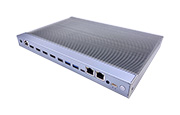
- Key Specs: Intel® Alder Lake-N processor, dual-display (HDMI 2.0 + DP), up to 32GB DDR4, fanless aluminum chassis.
- Recommended For: Production lines, vision inspection, and control cabinets.
- Benefits: Fanless design reduces maintenance; high memory supports complex workloads.
- Tip: Add M.2 or PCIe expansion modules for additional connectivity or storage.
IXEHL-35 — Compact Embedded PC with Rich I/O for Harsh Environments
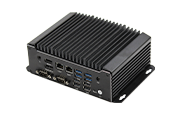
- Key Specs: Intel® Elkhart Lake Celeron® J6412 (4C/4T, 10W), HDMI + DP, dual LAN, six COM ports, eight USB ports.
- Recommended For: Factory automation controllers and HMIs with legacy connections.
- Benefits: Robust I/O, fanless construction, and long-term reliability.
- Tip: Use M.2 modules for 4G/Wi-Fi connectivity to enable remote monitoring.
NX-N100 — Ultra-Compact Embedded PC for Edge and IoT
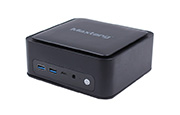
- Key Specs: Fanless ultra-compact design, Intel® Alder Lake-N, up to 32GB DDR4, triple-display (2× HDMI + USB-C DP).
- Recommended For: Digital signage, POS, kiosks, and IoT gateways.
- Benefits: Small footprint with scalable performance and multiple I/O options.
- Tip: Pair with M.2 4G/LTE or Wi-Fi modules for enhanced connectivity.

Together, the DXALN-10, IXEHL-35, and NX-N100 demonstrate Maxtang’s commitment to practical embedded PC design — combining performance, flexible expansion, and rugged reliability for automation and edge applications.
Embedded PCs in the IoT Era
Modern embedded PCs are central to edge computing in the IoT, processing sensor data locally and communicating actionable results to the cloud. With Ethernet, Wi-Fi, and cellular modules, they provide reliable connectivity for real-time monitoring and automation.
- Security: TPM and secure boot protect device identity; remote firmware updates enhance safety and reduce downtime.
- Connectivity: Multiple LAN ports, USB 3.2, and M.2 modules enable wired and wireless redundancy.
- Edge AI & Computing: Support for inference accelerators enables predictive maintenance and local decision logic.
Conclusion
Embedded PCs are no longer niche components — they are the backbone of industrial intelligence, enabling automation, efficient edge computing, and smarter control across factories, transportation, and smart cities.
Maxtang continues to focus on rugged, low-power embedded PC solutions that combine performance, scalability, and reliability for demanding applications. For datasheets, evaluation units, or technical support, contact Maxtang to find the best embedded computer solution for your project.
Explore more Maxtang's embedded pc
Related Article
-
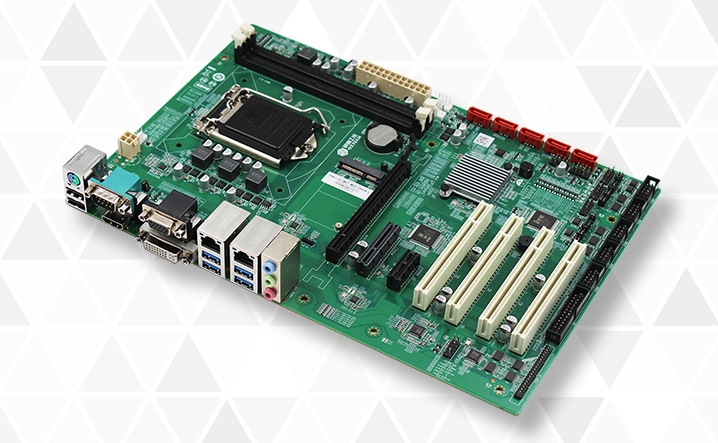 Best ATX Motherboard Manufacturers in 20242024-06-24Discover the world of ATX motherboards with our comprehensive guide Learn about their history, variations like microATX and EATX, and how to choose the right one for your needs Whether you re a gamer, PC enthusiast, or involved in industrial applicatio
 -
Understanding USB Type-C, USB 3.1, USB 3.2, USB4, and USB4 V22024-06-24Explore the evolution of USB technology from USB Type-C to USB4 V2 in our comprehensive blog Understand USB 3 1, USB 3 2, and USB4, including their features, data transfer speeds, power delivery capabilities, and compatibility Learn how these advancemen
-
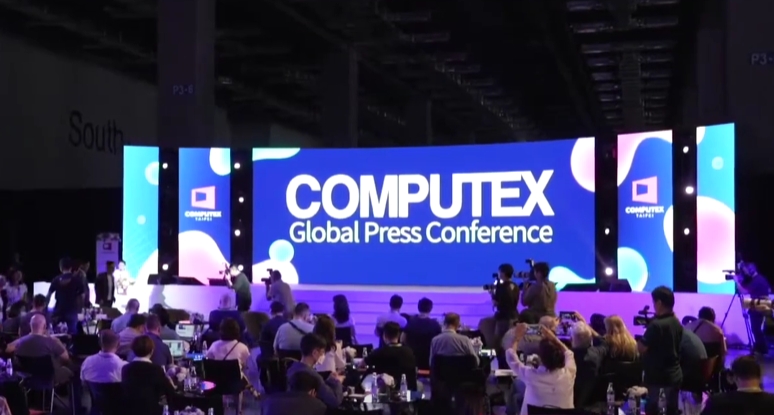 Maxtang at COMPUTEX Taipei 20242024-05-30Join Maxtang Computer at COMPUTEX Taipei 2024, the premier tech event in Taiwan! Discover the latest in IT and electronic products from June 4-7 at Nangang TaiNEX 2 Relive the excitement of COMPUTEX 2023 and get ready for another year of groundbreaking i


