
Industry News


What Is an Embedded PC? A Complete Guide to Industrial Embedded Computing
Embedded PC For Industrial Automation And Edge Computing Applications
2026-04-23 15:45:16
Embedded PCs are purpose-built computing platforms designed for dedicated control tasks in harsh industrial environments. Unlike consumer-grade systems, these compact, ruggedized units deliver deterministic performance, passive cooling, and extended temperature tolerance for factory automation, digital signage, and IoT edge deployments where reliability is non-negotiable.
Industrial sectors increasingly depend on embedded computing to bridge operational technology and IT infrastructure. As factories digitize, embedded PCs enable real-time data capture, edge analytics, and machine-to-machine communication that form the backbone of smart manufacturing.
What Is an Embedded PC?
An embedded PC is a specialized computer system engineered to perform specific control, monitoring, or processing functions within a larger mechanical or electronic system. Unlike general-purpose desktop computers, embedded systems integrate tightly with sensors, actuators, and communication interfaces to deliver real-time responses under constrained power, thermal, and space envelopes.
These systems combine a microprocessor or system-on-chip architecture with embedded firmware, real-time operating systems, and industrial I/O. Embedded PCs operate autonomously, often without user interaction, and are designed for continuous uptime in mission-critical applications.
Manufacturers such as Maxtang focus on Intel-based fanless industrial computing solutions tailored for digital signage, automation controllers, and edge inference workloads. As a member of the Intel IoT Solutions Alliance, Maxtang delivers ruggedized hardware engineered for extreme vibration, dust ingress, and wide operating temperatures.
Core Architecture of Embedded PCs
Embedded PC architecture prioritizes reliability over raw performance. Key design elements include:
Processor Selection
Embedded systems typically deploy x86 processors from Intel Atom, Celeron, or Core families, or ARM-based system-on-chips for ultra-low power scenarios. Recent trends show increasing adoption of processors with integrated NPU acceleration for edge AI inference, as evidenced by AMD Ryzen AI Embedded P100 processors offering up to 80 TOPS for physical AI acceleration.
Fanless Thermal Management
Industrial environments demand silent, maintenance-free cooling. Fanless designs eliminate mechanical wear points and prevent dust accumulation that degrades traditional fan-cooled systems. Passive thermal solutions use aluminum extrusions and heat pipes to dissipate CPU heat across the chassis, enabling operation in ambient temperatures from -25°C to 70°C.
Industrial I/O and Connectivity
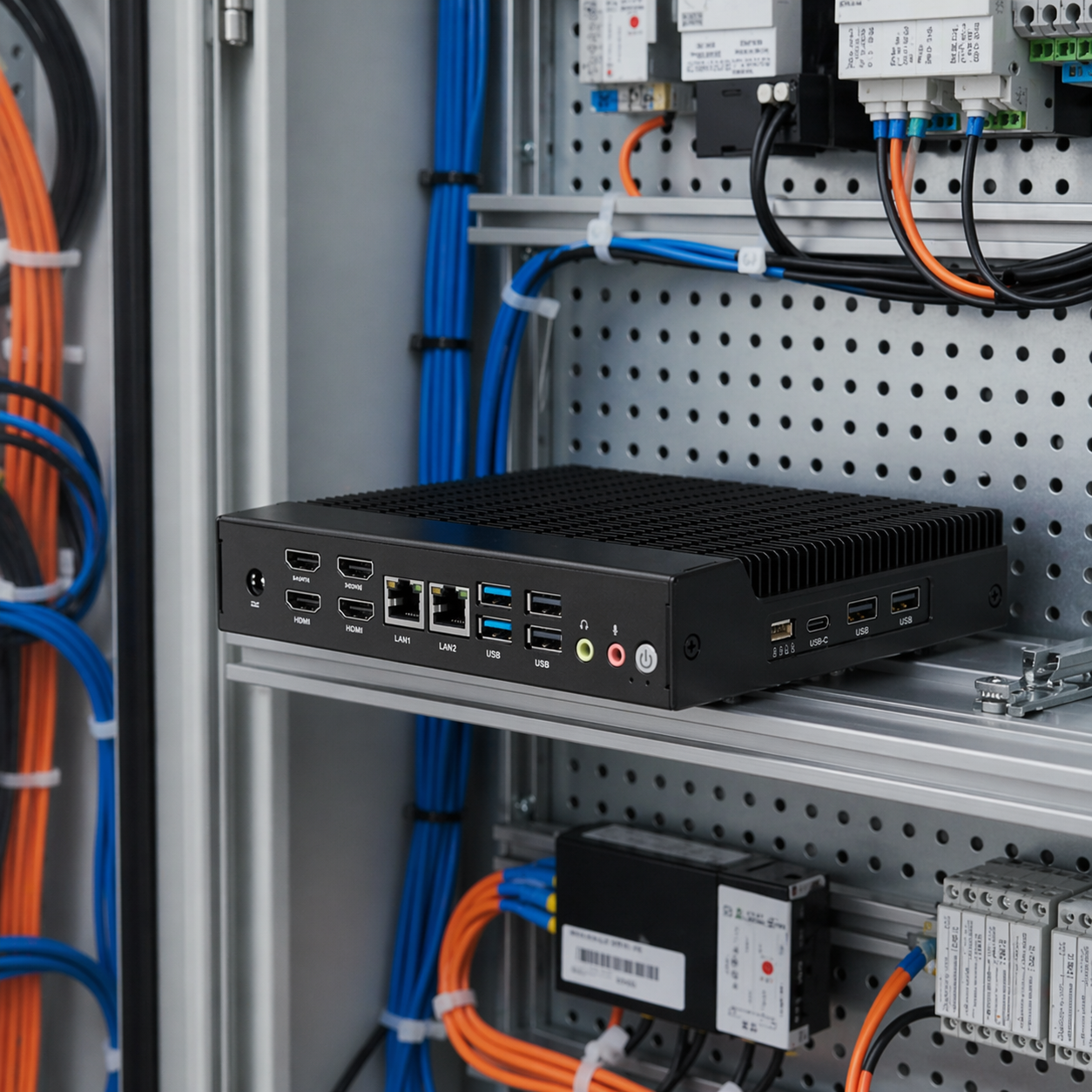
Embedded PCs integrate extensive wired and wireless interfaces: multiple Gigabit or 2.5GbE Ethernet ports, RS-232/422/485 serial communication, isolated digital I/O, and expansion via PCIe or M.2 slots. WWAN module support and dual SIM slots enable mobile connectivity for remote monitoring deployments.
Embedded PC vs. Standard Desktop: Key Differences
Feature | Embedded PC | Standard Desktop |
Operating Temperature | -25°C to 70°C | 0°C to 35°C |
Cooling | Fanless passive | Active fan-based |
Vibration Resistance | MIL-STD-810G certified | Not ruggedized |
Component Lifecycle | 7-10 years availability | 12-18 months |
Form Factor | Compact DIN-rail/wall-mount | Tower/mini-tower |
Power Input | 9-36V DC, automotive-grade | AC adapter only |
The embedded automation computers market reached USD 44.37 billion in 2025 and is projected to grow at 8.8% CAGR, driven by AI integration and demand for ruggedized systems.
Industrial Applications of Embedded PCs
Factory Automation and Machine Control
Embedded PCs function as programmable logic controller replacements or motion control platforms in CNC machining, robotic workcells, and assembly lines. Real-time operating systems like VxWorks or real-time Linux variants ensure deterministic response to sensor inputs and actuator commands within microsecond latency budgets.
Digital Signage and Retail Displays
Digital signage deployments require compact, silent systems that drive multiple 4K displays while consuming minimal power. Embedded PCs with Intel UHD Graphics support simultaneous HDMI, DisplayPort, and LVDS outputs for video walls, menu boards, and interactive kiosks. Content management occurs via Ethernet backhaul to central servers.
Edge AI and Computer Vision
Machine vision inspection, defect detection, and predictive maintenance increasingly deploy neural network inference at the edge. Embedded systems with integrated GPU compute or dedicated AI accelerators process camera streams locally, reducing cloud bandwidth costs and latency. The embedded systems market is projected to reach USD 211.6 billion by 2036, driven by edge AI adoption.
Transportation and Intelligent Transportation Systems
In-vehicle computing, railway platform monitoring, and traffic management systems require shock-resistant, wide-temperature embedded hardware. Vehicular certifications like E-Mark compliance and ignition power sequencing support automotive and transit applications.
Fanless Embedded Computers: Engineering for Reliability
Fanless architecture dominates industrial embedded computing due to multiple operational advantages:
Extended MTBF: Elimination of fan bearings removes the primary wear mechanism, achieving mean time between failures exceeding 100,000 hours.
Sealed Enclosures: IP65-rated chassis prevent dust, moisture, and contaminant ingress in chemical plants, food processing, and outdoor installations.
Silent Operation: Zero acoustic emissions suit medical imaging suites, broadcast studios, and library automation.
Reduced Power Consumption: Passive cooling reduces auxiliary power draw compared to active fan systems.
At Embedded World 2026, manufacturers showcased next-generation fanless platforms including ECS LIVA Z4F supporting DDR5 memory and dual Gigabit LAN for kiosks and edge gateways.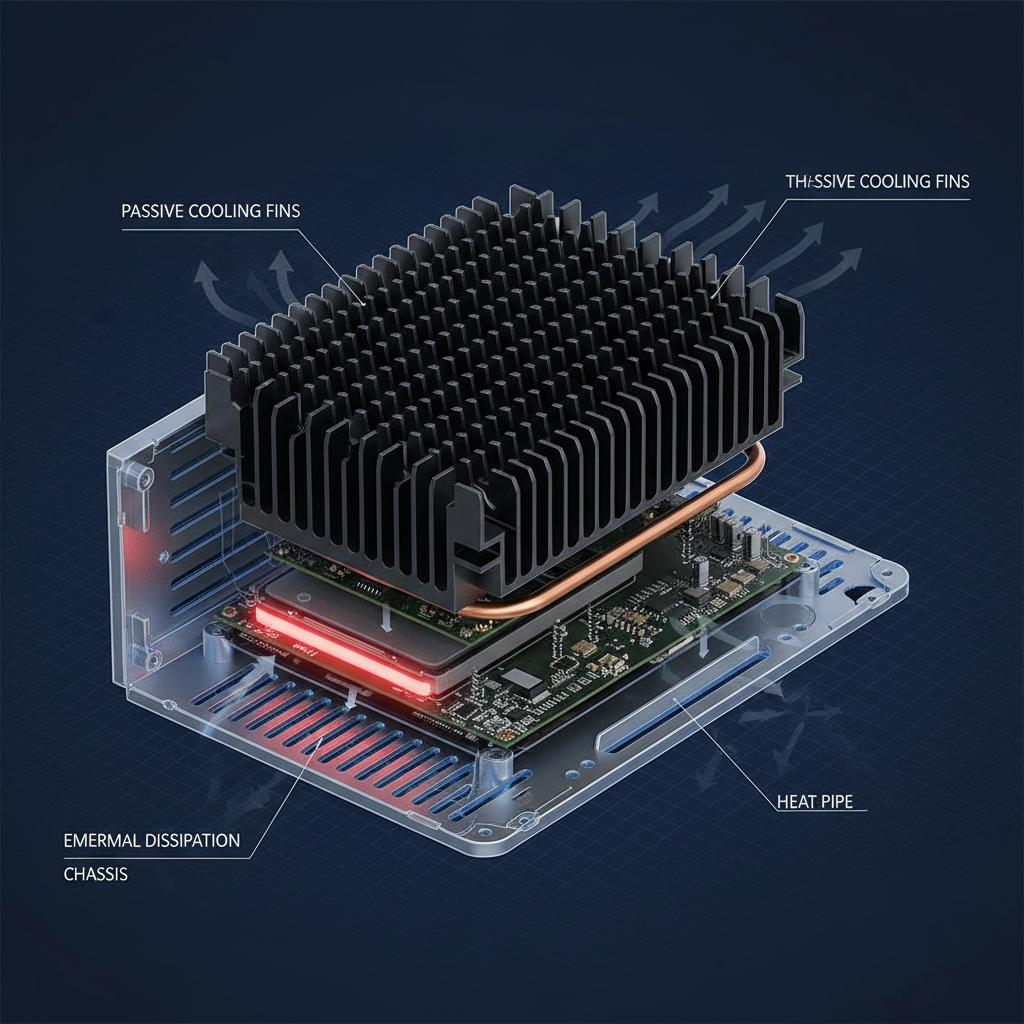
Embedded Motherboards and Modular Design
Form factor standardization enables system integrators to customize embedded solutions around application-specific requirements. Common embedded motherboard formats include:
Mini-ITX: 170x170mm, supports standard ATX power, two RAM slots, PCIe expansion.
Thin Mini-ITX: Reduced height variant for space-constrained enclosures.
Pico-ITX: 100x72mm ultra-compact format for embedded gateways.
COM Express: Modular computer-on-module standard enabling rapid board-level customization.
SMARC: ARM and x86 module specification for energy-efficient designs.
OEM integrators select motherboard platforms based on processor generation support, extended temperature certification, and long-term component availability guarantees typically spanning seven years.
Real-Time Operating Systems and Software Stack
Embedded PCs run specialized operating systems optimized for deterministic behavior:
Real-Time Linux: Preemptible kernel patches (PREEMPT_RT) provide hard real-time scheduling.
Windows 10 IoT Enterprise: Long-term servicing channel with 10-year support, specialized IoT licensing.
VxWorks: Commercial RTOS certified for safety-critical aerospace and medical applications.
FreeRTOS: Open-source kernel for resource-constrained microcontroller systems.
Containerization via Docker and Kubernetes increasingly appears in embedded deployments, enabling edge orchestration and over-the-air updates for distributed fleets.
Edge Computing and IIoT Integration
The Industrial Internet of Things architecture positions embedded PCs as edge gateways aggregating sensor data, executing local analytics, and synchronizing with cloud platforms. Edge computing reduces latency for control loops requiring sub-100ms response times while minimizing bandwidth costs for terabyte-scale video and telemetry streams.
Protocol translation functions enable legacy Modbus RTU, Profibus, and CAN bus devices to communicate via MQTT, OPC-UA, or RESTful APIs to modern cloud services. Time-sensitive networking (TSN) extensions to Ethernet provide deterministic packet delivery for synchronized motion control.
Selecting an Industrial PC Supplier
Procurement managers evaluate embedded PC vendors across multiple dimensions:
1.Processor Roadmap Alignment: Long-term Intel or AMD embedded processor availability guarantees.
2.Certifications: CE, FCC, UL, cUL marks; industry-specific standards like EN 50155 (rail), MIL-STD-810 (defense).
3.Customization Capability: Logo printing, I/O configuration, BIOS modifications, thermal validation.
4.Geographic Support: Regional sales offices, local RMA processing, application engineering assistance.
5.Supply Chain Resilience: Component buffer stock, alternative sourcing, manufacturing flexibility.
Established manufacturers provide reference designs, thermal simulation reports, and shock/vibration test data accelerating product certification timelines.
Embedded PC Performance Requirement
Application | CPU Requirement | RAM | Storage | Networking |
Digital Signage | Celeron N-series | 4-8 GB | 64 GB eMMC | 1x GbE |
Machine Vision | Core i5/i7 | 16-32 GB | 256 GB NVMe | 2x 2.5GbE |
Edge AI Inference | Core Ultra w/NPU | 32-64 GB | 512 GB NVMe | 2x 2.5GbE + Wi-Fi 6E |
PLC Replacement | Celeron/Atom | 4-8 GB | 32 GB mSATA | 2x GbE + RS-485 |
In-Vehicle Computing | Core i3 automotive | 8-16 GB | 128 GB industrial SSD | LTE Cat-6 + GPS |
Specification selection balances performance headroom for software updates against power budget and thermal constraints.
Future Trends in Embedded Computing
AI Acceleration at the Edge
Integrated neural processing units and GPU compute enable on-device training and inference. The shift from cloud-dependent AI to autonomous edge intelligence supports latency-sensitive applications like autonomous mobile robots and quality inspection.
Open-Source ISA Adoption
RISC-V processors offer customizable instruction sets without licensing fees, attracting industrial automation and aerospace applications requiring long-term architectural control. Growing RISC-V toolchain maturity accelerates adoption beyond microcontroller-class designs.
5G and Private Wireless Networks
Low-latency 5G connectivity enables wireless factory automation previously constrained to wired Ethernet. Private LTE and 5G deployments provide deterministic wireless infrastructure for mobile robots and automated guided vehicles.
Cybersecurity Hardening
The EU Cyber Resilience Act and IEC 62443 standards mandate embedded system security measures including secure boot, hardware root of trust, encrypted storage, and vulnerability disclosure processes. Embedded PC vendors increasingly offer TPM 2.0, measured boot, and signed firmware updates.
Conclusion
Embedded PCs serve as the computational foundation for modern industrial automation, edge computing, and IoT infrastructure.
As edge AI, 5G connectivity, and industrial digitalization accelerate, embedded computing platforms must balance processing power, energy efficiency, and cybersecurity requirements.
FAQ
What distinguishes an embedded PC from a standard computer?
Embedded PCs are purpose-built for specific control tasks, featuring industrial-grade components, fanless cooling, extended temperature ranges, and long component availability unlike consumer systems.
Why are fanless designs preferred in industrial environments?
Fanless systems eliminate mechanical wear, prevent dust accumulation, operate silently, and achieve higher reliability ratings required for 24/7 operation in harsh conditions.
Can embedded PCs run Windows operating systems?
Yes, most x86 embedded PCs support Windows 10 IoT Enterprise LTSC, offering 10-year support lifecycles ideal for industrial deployments requiring long-term stability.
What connectivity options do embedded PCs provide?
Typical industrial PCs include multiple Gigabit Ethernet ports, RS-232/422/485 serial, USB 3.x, digital I/O, PCIe expansion, M.2 slots, and optional Wi-Fi/LTE modules.
How long is component availability guaranteed?
Industrial embedded PC manufacturers typically guarantee component availability for 7-10 years, ensuring spare parts and replacements for long product lifecycles.
Source:
AMD News. (2026, March 9). AMD expands Ryzen AI Embedded P100 for Edge AI. AMD. https://www.amd.com/en/blogs/2026/amd-expands-ryzen-ai-embedded-p100-for-edge-ai.html
Markets, R. A. (2026, January 27). Embedded Automation Computers Market Report 2026: $67.61 BN Opportunities, Trends, Competitive Landscape, Strategies, and Forecasts, 2020-2025, 2025-2030F, 2035F. GlobeNewswire News Room. https://www.globenewswire.com/news-release/2026/01/27/3226140/28124/en/Embedded-Automation-Computers-Market-Report-2026-67-61-Bn-Opportunities-Trends-Competitive-Landscape-Strategies-and-Forecasts-2020-2025-2025-2030F-2035F.html
Research, T. M. (2026, February 23). Embedded System Market. Transparency Market Research. https://www.transparencymarketresearch.com/embedded-system.html
Sahu, D. (n.d.). ECS Highlights Fanless and Edge Computing Platforms at. https://www.facebook.com/VARINDIAMagazine. https://www.varindia.com/news/ecs-highlights-fanless-and-edge-computing-platforms-at-embedded-world-2026
Related Article
-
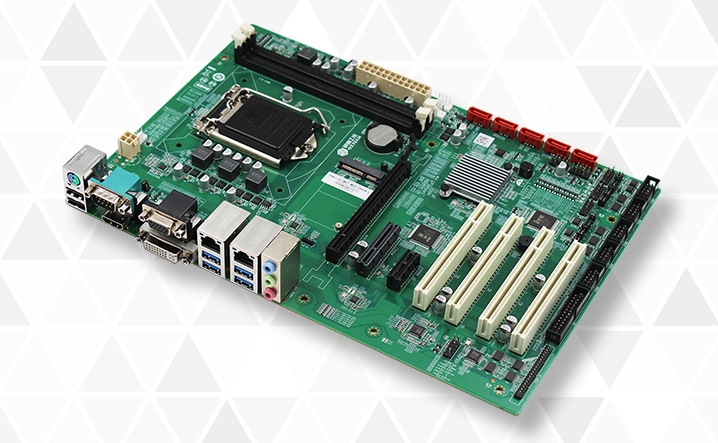 Best ATX Motherboard Manufacturers in 20242024-06-24Discover the world of ATX motherboards with our comprehensive guide Learn about their history, variations like microATX and EATX, and how to choose the right one for your needs Whether you re a gamer, PC enthusiast, or involved in industrial applicatio
 -
Understanding USB Type-C, USB 3.1, USB 3.2, USB4, and USB4 V22024-06-24Explore the evolution of USB technology from USB Type-C to USB4 V2 in our comprehensive blog Understand USB 3 1, USB 3 2, and USB4, including their features, data transfer speeds, power delivery capabilities, and compatibility Learn how these advancemen
-
 Maxtang at COMPUTEX Taipei 20242024-05-30Join Maxtang Computer at COMPUTEX Taipei 2024, the premier tech event in Taiwan! Discover the latest in IT and electronic products from June 4-7 at Nangang TaiNEX 2 Relive the excitement of COMPUTEX 2023 and get ready for another year of groundbreaking i


